Why Both Broadcaster Archives and OTT Services Should Be Checked When Looking for Discontinued Entertainment Shows and Dramas

When a favorite entertainment show, variety program, or classic drama stops airing or suddenly disappears from a familiar streaming menu, most viewers naturally check a single platform typically their primary subscription service or the original TV network’s website. However, this single-source search strategy frequently leads to the false conclusion that a show is permanently lost.
In the modern media ecosystem, television networks and Over-The-Top (OTT) streaming platforms operate under vastly different business models, digital rights management policies, and content retention schedules. A program delisted from a network’s catch-up replay section may still be licensed to a third-party subscription service. Conversely, a show purged from a global streaming service may have quietly reverted to the original broadcaster’s proprietary archive. To locate discontinued television content efficiently, viewers must understand these underlying industry dynamics and cross-reference both distribution channels systematically.
Deep-Seated Reasons Why Entertainment Shows and Dramas Disappear
Content removal from digital platforms is rarely accidental. It is driven by complex financial, legal, and operational factors that govern how digital media rights are managed across global and domestic markets.
Licensing Window Expirations & Residual Costs
Streaming services do not own every title in their catalog; they lease distribution rights for specific timeframes (e.g., 1 to 5 years). When a licensing agreement expires, retaining the title requires paying renewal fees. Furthermore, media companies must pay ongoing “residuals”—royalties distributed to actors, directors, writers, and crew members whenever a show streams. For older or niche titles with declining viewership, platforms often determine that ongoing residual payments exceed the revenue generated, prompting them to quietly drop the content.
Music Clearance Issues & Corporate Tax Write-Offs
Music licensing is a major technical hurdle for older variety shows and dramas. Sync rights for background tracks, live musical performances, or guest appearances are frequently negotiated for a limited broadcast window. Renewing global music rights for digital streaming can be prohibitively expensive, leading networks to vault entire seasons rather than re-edit audio tracks. Additionally, corporate restructuring and tax write-offs have led major media conglomerates to deliberately purge original programming from SVOD (Subscription Video-On-Demand) platforms to claim impairment charges, pulling titles completely off digital storefronts.
Content Reclamation Strategies Back to Broadcaster Catch-up Archives
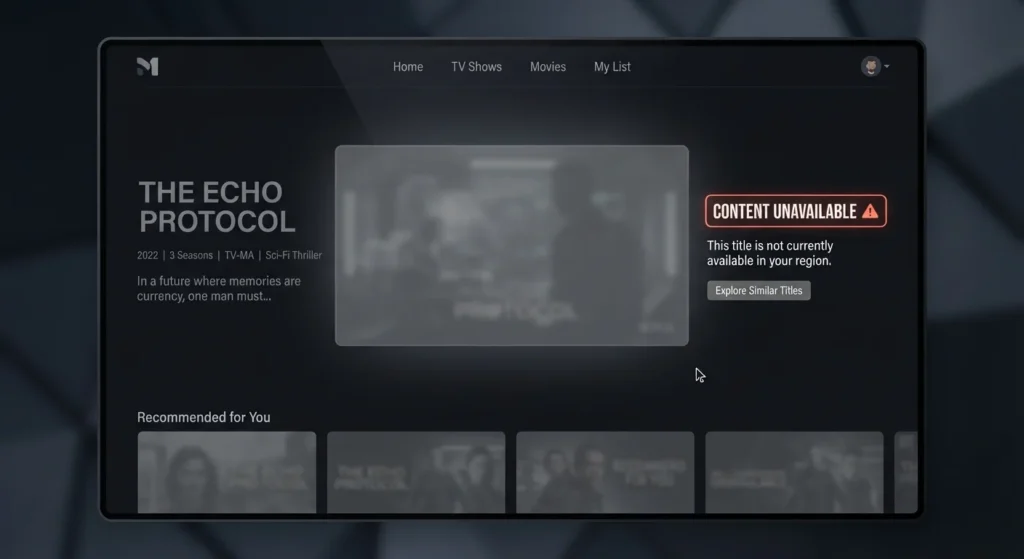
When international streaming contracts expire, original television networks frequently reclaim their proprietary intellectual property (IP). As legacy broadcasters launch or consolidate their own direct-to-consumer streaming apps, they pull exclusive titles back into their native catch-up and VOD archives to build subscriber loyalty for their own platforms.
Core Differences Between Broadcaster Archives and OTT Services
Understanding where to look requires analyzing how broadcaster VOD archives and OTT services manage their libraries differently.
- Broadcaster Archives (Catch-up & Proprietary VOD): Maintained by traditional television networks, these portals prioritize recent original broadcasts. They typically offer free catch-up viewing immediately after a linear TV broadcast for a limited window (ranging from 14 days to a few months). Once this promotional broadcast window closes, episodes are either locked behind a network paywall or archived in deep catalog databases. While their interfaces can be less polished, broadcaster archives retain exclusive historical rights to niche local programming that global OTT apps never license.
- OTT Streaming Services (SVOD / AVOD): Platforms like Netflix, Disney+, Max, or regional streaming apps acquire aggregated broadcast packages. They excel at offering full-season box sets in high resolution with multi-language subtitles. However, their libraries are dynamic. They regularly rotate content out to manage server infrastructure costs and licensing budgets, making them prone to sudden “content purges” without user notification.
Comparative Matrix: Broadcaster Archives vs. OTT Services
| Criteria | Broadcaster Archives (Catch-up / VOD) | OTT Services (SVOD / AVOD) |
|---|---|---|
| Primary Goal | Replaying recent network broadcasts & IP retention | Long-term monetization & subscriber retention |
| Availability Window | Short-term (typically 2 to 12 weeks post-airing) | Medium to long-term (multi-year licensing deals) |
| Pricing Model | Free with ads or bundled with cable subscriptions | Monthly subscription fee or free ad-supported (AVOD) |
| Catalog Breadth | Deep for single network; limited to network IP | Broad across multiple studios; subject to purges |
| Content Risk | Moves to paid archives or deep vault after initial air | Removed when licenses expire or for tax write-offs |
A 4-Step Search Workflow for Finding Discontinued Content
To avoid wasting time manually searching individual platform menus, follow this systematic four-step triage workflow.
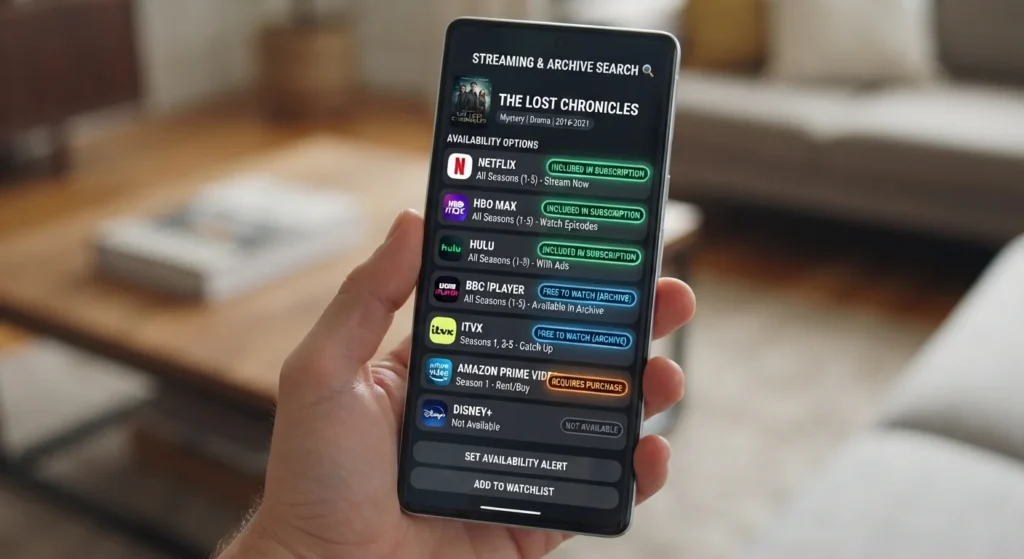
Step 1: Search via Streaming Data Aggregators
Before checking individual apps, use specialized streaming search engines and aggregator databases (such as JustWatch, Reelgood, or regional metadata engines). These platforms index licensed catalogs across dozens of SVOD, AVOD, and TVOD platforms simultaneously. Enter the show’s exact original title and check availability across your local region.
Step 2: Check Official Broadcaster VOD / Replay Portals Directly
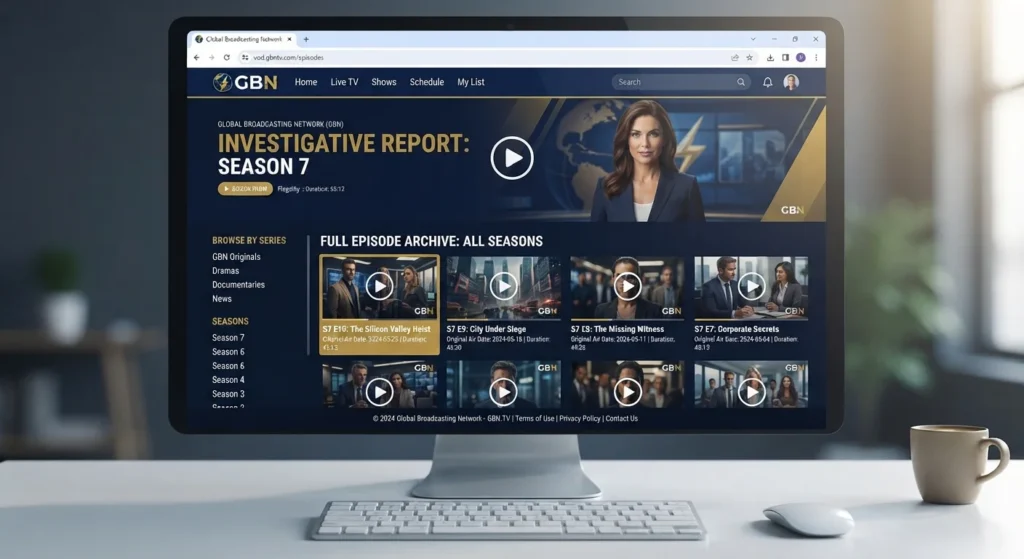
If aggregators yield no results on major OTT services, navigate directly to the official VOD portal or mobile app of the network that originally produced the show. Search using the show’s native-language title or episode numbers. Check both the free catch-up replay section and any premium “classic archive” tiers offered by the network.
Step 3: Search Regional OTT Platforms and SVOD/AVOD Services
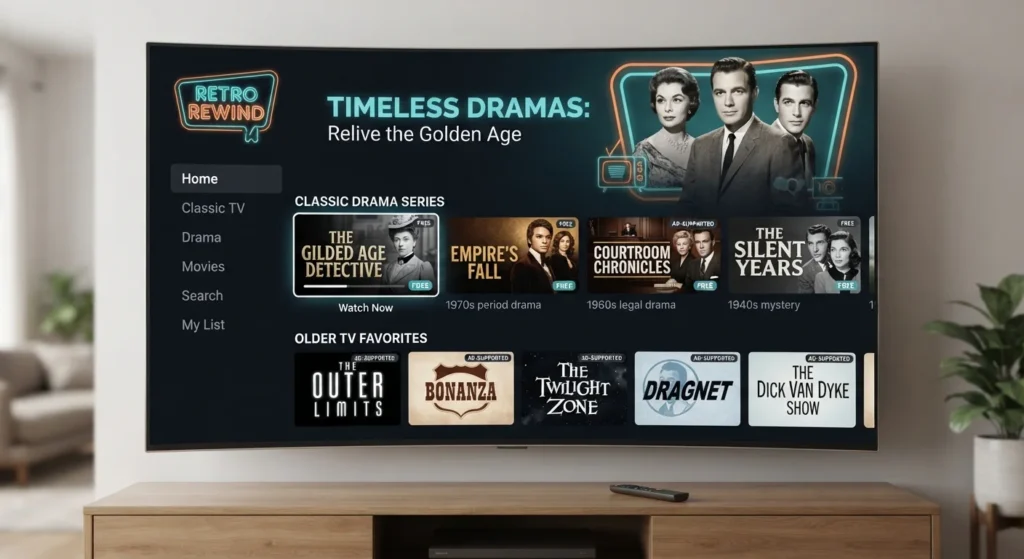
If primary global SVOD services do not carry the title, expand your search to regional streaming platforms and free Ad-Supported Streaming TV (AVOD) platforms (such as Pluto TV, Tubi, or local telecom video apps). AVOD platforms frequently acquire non-exclusive streaming rights for older television series and discontinued variety shows that subscription services no longer carry.
Step 4: Explore Digital Purchase/Rental (TVOD) or Physical Media Archives
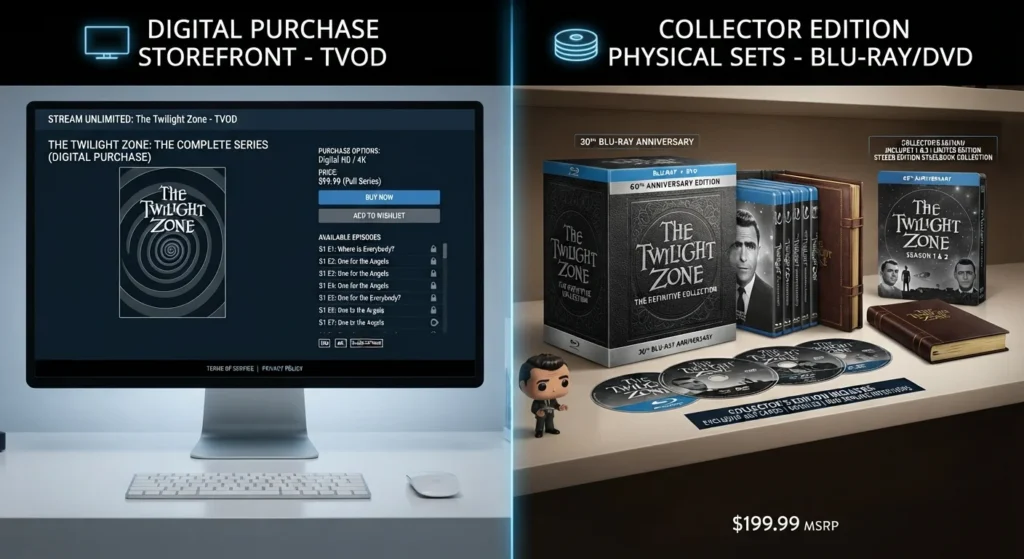
When a show is entirely removed from subscription (SVOD) and ad-supported (AVOD) streaming, it may remain available via Transactional VOD (TVOD) on digital storefronts (such as Apple TV, Amazon Prime Video Store, or Google TV) for permanent digital purchase or episode rental. If digital rights are completely locked due to music clearance issues, search secondary markets for official DVD or Blu-ray physical media releases.
FAQ – Frequently Asked Questions About Finding Delisted Shows
1. Why is a show available on an OTT platform overseas but removed from local apps?
Streaming distribution rights are strictly geofenced by country or region. A production studio may sell exclusive distribution rights to an OTT platform in North America while licensing the same show to a local television broadcaster in Asia or Europe. If local licenses expire, the show disappears locally despite remaining active in overseas catalogs.
2. How can I tell if a show is permanently removed or just temporarily out of license?
If a title disappears due to an expiring license, it frequently returns to digital platforms within 3 to 12 months after rights are re-negotiated or acquired by a competitor. However, if a show is delisted alongside news of corporate tax write-offs or music clearance disputes, the removal is often long-term or permanent.
3. Does buying a physical DVD/Blu-ray or digital TVOD copy guarantee permanent access?
Physical media (DVDs and Blu-rays) provides true offline permanence because playback is independent of server availability or licensing renewals. Digital purchases (TVOD) on storefronts grant long-term access, but terms of service generally state that if the platform loses hosting rights from the publisher, the title could theoretically become unavailable for re-download.
4. Are AVOD (free ad-supported streaming) services safe and legal to use?
Yes, legitimate AVOD services operate entirely legally by partnering with content owners and television networks. They monetize content through video advertisements shown during playback, making them an excellent, legal alternative for finding classic, discontinued, or out-of-print television series.